
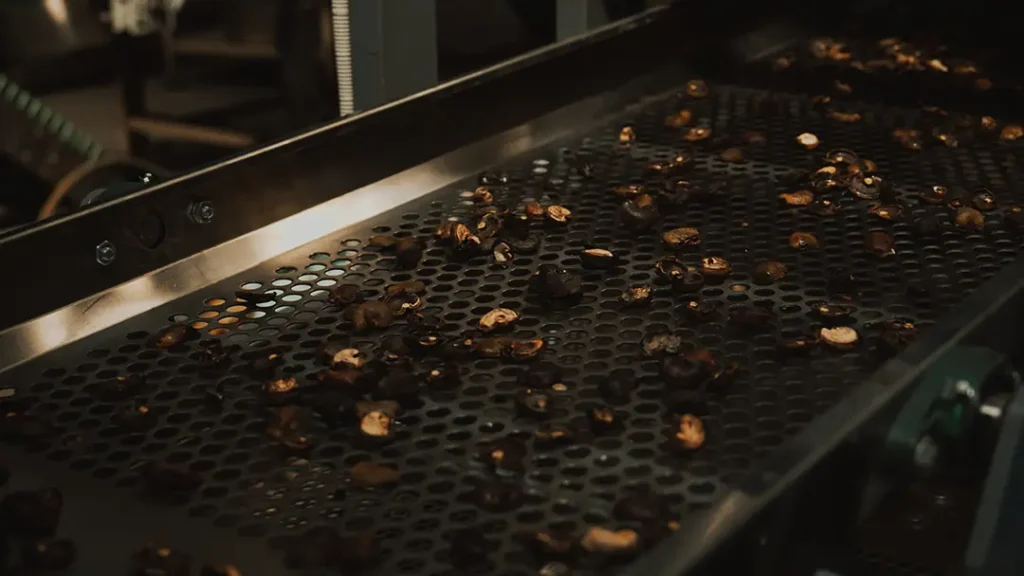
What Is a Cashew Scooping Line?
After a cashew nut has been cut, the kernel may still remain inside or partially attached to the opened shell.
The scooping stage assists with separating the kernel from shell material so the recovered kernel can move to subsequent processing stages.
Depending on the line configuration, scooping equipment can work together with:
- shelling or cutting machinery;
- vibrating separation equipment;
- material-transfer systems;
- grading equipment;
- inspection or downstream kernel-handling stages.
The exact configuration depends on the processing requirement.
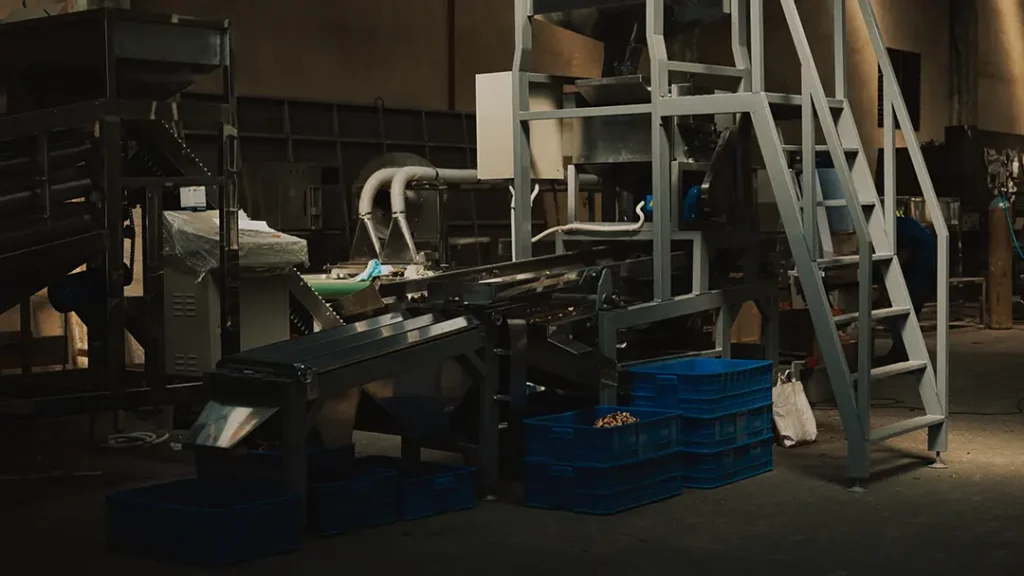
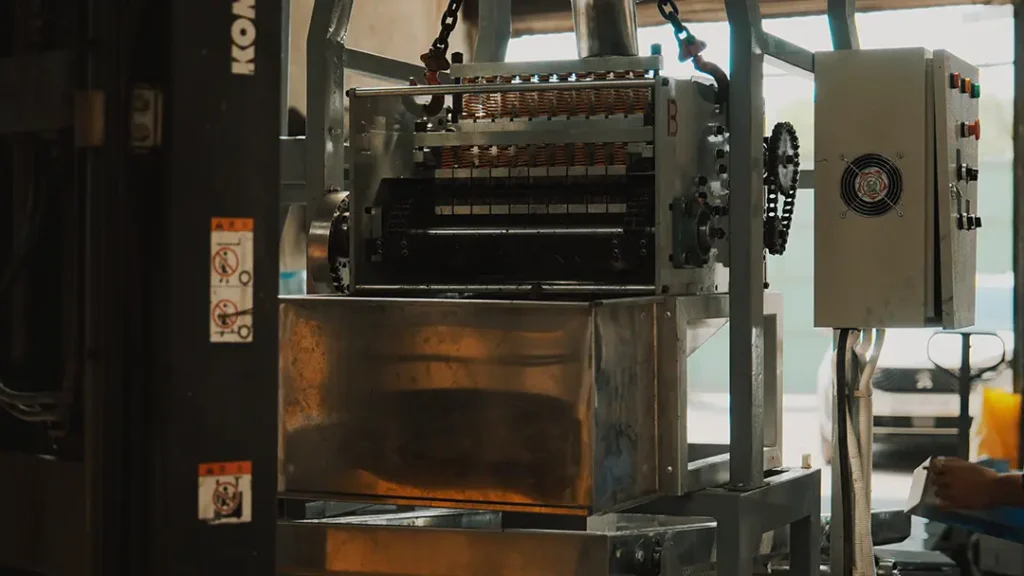
Shelling vs. Scooping
Shelling and scooping are related but different processing functions.
Shelling or Cutting
The shelling machine cuts or opens the hard outer cashew shell.
Scooping
The scooping stage works with the opened nut after cutting and assists with separating the kernel from the shell.
A factory may therefore use shell cutting and scooping as consecutive processing stages.
The capacities of these stages should be evaluated together so that the scooping equipment can handle the material supplied by the upstream cutting system.
Where Scooping Fits in the Cashew Processing Workflow
A typical process around the scooping stage can include:
- Prepared Raw Cashew → Shell Cutting → Scooping / Kernel-Shell Separation → Kernel Collection → Drying or Conditioning → Peeling → Grading
The exact sequence depends on the factory configuration and equipment used.
Scooping should not be evaluated only by the machine itself. The performance of the upstream cutter, feeding stability and the downstream material-handling system also affect the overall workflow.
Daniel Machine Scooping Applications
Daniel Machine’s current scooping solution is positioned for processors that require assistance with kernel extraction after shell cutting.
The equipment can be evaluated for:
- smaller processing facilities;
- medium-sized cashew processors;
- existing factories adding a scooping stage;
- processing-line expansion;
- new machinery configurations combining cutting and downstream separation.
The final machine configuration should be confirmed according to the required processing capacity and surrounding equipment.
Handling Different Cashew Sizes
Cashew nuts can vary in size and physical characteristics.
Daniel Machine’s current scooping solution is designed with adjustment capability for different production requirements.
However, size variation should also be considered earlier in the processing workflow.
Consistent raw-material grading and correct cutter settings can help improve the condition of the material entering the scooping stage.
Processors should therefore evaluate scooping together with raw-nut grading and shell-cutting setup.
Matching the Scooping Line With the Shelling Machine
A scooping machine should have sufficient capacity to handle the output of the upstream shell-cutting stage.
For example, selecting a high-capacity cutter without considering the following scooping and separation stages can create a bottleneck in the line.
When evaluating the complete workflow, consider:
- shelling-machine capacity;
- actual operating throughput;
- nut-size distribution;
- feeding stability;
- quantity of cut material entering the scooping stage;
- uncut or incompletely processed nuts;
- shell separation requirements;
- downstream drying, peeling and grading capacity.
The required configuration should be based on the complete processing system rather than one nominal machine rating.
What Happens to Uncut or Unscooped Material?
Not every nut entering a production line will necessarily reach the next stage in the same condition.
A practical processing configuration should provide a method for identifying material such as:
- uncut nuts;
- kernels still retained in the shell;
- loose shell fragments;
- recovered kernels;
- material requiring another processing pass.
The exact separation and recirculation method depends on the line configuration.
This is one reason why scooping should be discussed together with the shelling and separation equipment surrounding it.
Standalone Scooping Machine or Integrated Line?
Standalone Requirement
A processor may need a standalone scooping stage when the factory already has compatible shell-cutting and downstream equipment.
Integrated Requirement
A wider configuration may be appropriate when:
- cutting and scooping equipment are being purchased together;
- production capacity is being expanded;
- existing equipment creates a bottleneck;
- material transfer between stages needs improvement;
- a new processing line is being planned.
Daniel Machine can evaluate the scooping requirement together with the surrounding cashew-processing machinery.
Factors to Consider When Selecting a Scooping Configuration
Important project information includes:
- required processing capacity;
- shelling or cutting machine currently used;
- raw cashew size range;
- operating hours per shift;
- current method of kernel-shell separation;
- downstream drying or peeling equipment;
- available factory space;
- electrical supply and utilities;
- existing conveyors or material-transfer equipment;
- destination country.
This information helps define whether the requirement is for an individual scooping machine or a wider processing configuration.
Integration With Daniel Machine Shelling Equipment
Daniel Machine manufactures several automatic shelling and cutting configurations for different production capacities.
Where scooping equipment is used after a Daniel Machine cutting system, the capacity and material flow between the two stages should be evaluated together.
Processors should avoid selecting equipment solely by the maximum published capacity of the shelling machine.
Raw-material conditions, actual operating throughput and downstream processing capacity also affect the required setup.
Engineering and Technical Support
Depending on the confirmed project scope, Daniel Machine can support discussions involving:
- machine selection;
- production-capacity configuration;
- process integration;
- operating guidance;
- installation guidance;
- operator training;
- maintenance requirements;
- spare parts;
- packing and international shipping requirements.
The exact machine and support scope is confirmed in the project quotation.
Request a Cashew Scooping Line Quote
For a useful technical quotation, provide Daniel Machine with:
- target capacity;
- current shelling or cutting machine;
- raw cashew size information;
- operating hours or shifts;
- existing scooping or separation method;
- downstream equipment;
- factory dimensions;
- available electrical supply;
- delivery country;
- whether you need the scooping machine only or an integrated processing configuration.
Photos or layouts of the existing line can also help when evaluating an expansion project.
Frequently Asked Questions About Cashew Scooping Machines
Find answers about cashew scooping, kernel-shell separation, machine placement, raw cashew sizes, production capacity, line integration, and the information required when requesting a scooping-machine quotation.
What does a cashew scooping machine do?
A cashew scooping machine assists with separating kernels from cut cashew shells after the shell-cutting stage. It forms part of the post-cutting process and helps prepare the separated material for subsequent processing stages.
Is scooping the same as cashew shelling?
No. Cashew shelling or cutting opens the hard outer shell of the raw cashew nut. Scooping takes place after cutting and supports the separation of the kernel from the opened shell.
Where is a scooping machine installed in the processing line?
A cashew scooping machine is typically positioned after the shell-cutting stage and before later kernel-processing stages such as drying, peeling, or grading, depending on the configuration of the factory and production line.
Can a scooping machine work with different cashew sizes?
Daniel Machine's current scooping solution includes adjustment capability for different processing requirements. Raw-nut grading and correct shelling settings should still be considered because the size, condition, and consistency of the material entering the scooping stage can affect processing performance.
How do I choose the correct scooping-line capacity?
Start with the actual output of the shelling or cutting stage. Then consider operating hours, raw-material characteristics, production targets, downstream equipment, material flow, and the desired line configuration. The scooping stage should be sized to work effectively with the surrounding equipment rather than evaluated only as an isolated machine.
Can Daniel Machine integrate scooping with shelling machinery?
Yes. Scooping equipment can be evaluated together with shelling, cutting, separation, grading, and material-handling stages according to the requirements of the project and the existing or proposed processing configuration.
Does Daniel Machine publish a standard capacity for its scooping line?
The current public information does not provide a controlled master capacity specification that should be applied universally to every scooping-line project. Capacity and final machine configuration should therefore be confirmed for the specific application, raw material, upstream production rate, and required line setup.
What information should I send for a quotation?
Provide your required capacity, cutting-machine details, raw cashew information, daily working hours, factory layout, available utilities, downstream equipment, and delivery country. Information about the existing processing line is also useful when the scooping machine needs to be integrated with current equipment.