Daniel Machine Cashew Shelling Machine Models
Compare Daniel Machine cashew shelling machine configurations by cutting capacity, approximate eight-hour raw cashew input, and key processing performance indicators.
| Model | Cutting Capacity | Approx. 8-Hour Input | Main Performance Indicator |
|---|---|---|---|
| 3-Blade | 70–100 kg/h | 560–800 kg |
Uncut nuts <10%
Shell fragments <5%
|
| 6-Blade | 160–200 kg/h | 1,280–1,600 kg |
Uncut nuts <10%
Shell fragments <5%
|
| 8-Blade | 200–250 kg/h | 1,600–2,000 kg |
Kernel breakage <10%
|
| 10-Blade | 270–400 kg/h | 2,160–3,200 kg |
Uncut nuts <10%
Shell fragments <5%
|
| 12-Blade | 300–500 kg/h | 2,400–4,000 kg |
Whole-kernel recovery >90%
|
| 16-Blade | 350–600 kg/h | 2,800–4,800 kg |
Performance depends on final configuration
|
Performance note: These figures describe stated processing capacity and performance under suitable operating conditions. Actual results can vary according to raw cashew size, moisture condition, pre-treatment, blade adjustment, feeding stability and other operating conditions.
The eight-hour figures refer to approximate raw-cashew input, not the final weight of edible kernels produced.
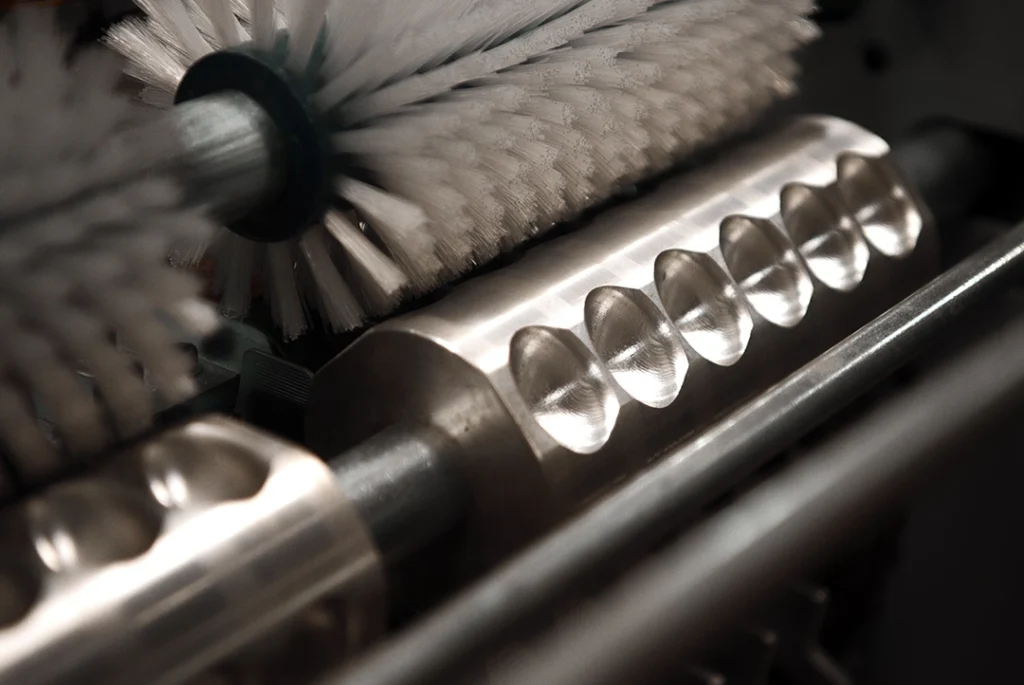
What Is a Cashew Shelling Machine?
What Is a Cashew Shelling Machine?
A cashew shelling machine opens the hard outer shell of properly prepared raw cashew nuts so that the kernel can move to downstream processing stages.
In an automatic shelling system, the process can include:
- Raw-cashew feeding;
- Size separation;
- Nut positioning;
- Precision shell cutting;
- Shell and kernel separation;
- Kernel transfer or grading;
- Electrical control and material handling.
Proper preparation of the raw cashew nuts is important. Mixing substantially different nut sizes or processing incorrectly conditioned raw material can increase uncut nuts, shell fragments and kernel breakage.
Cashew Shelling Machine vs Cashew Cutting Machine
The terms cashew shelling machine and cashew cutting machine are closely related but can describe different scopes.
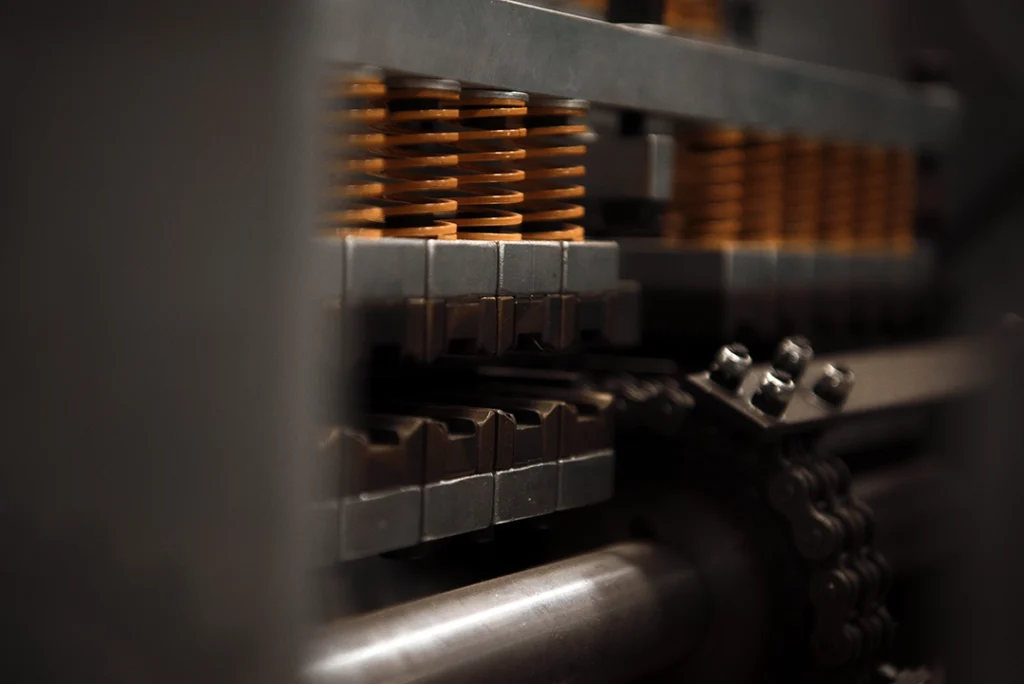
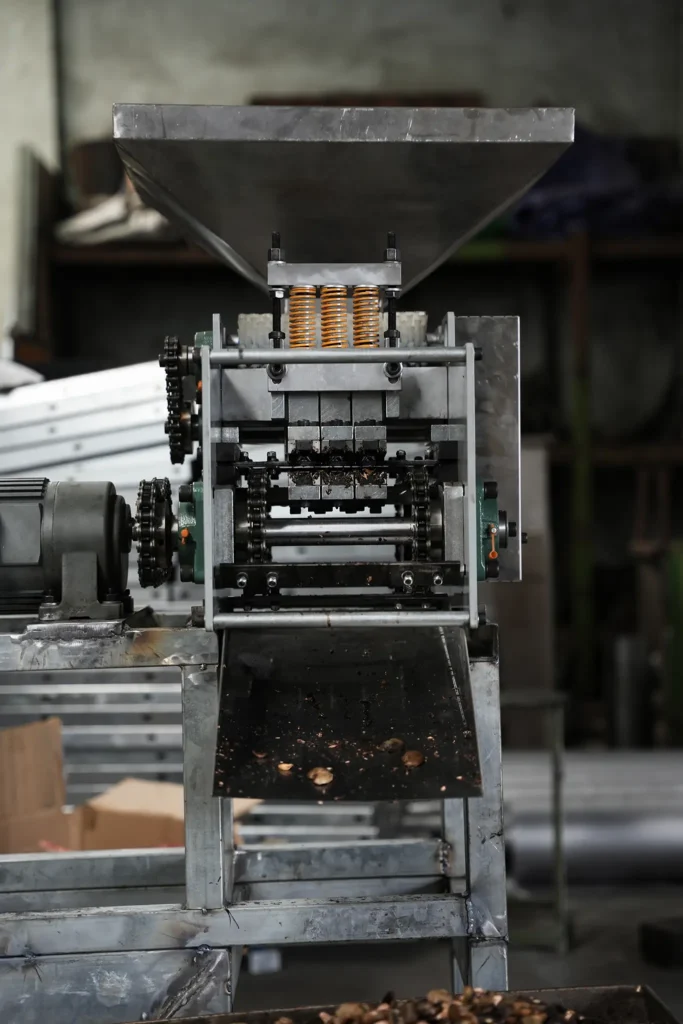
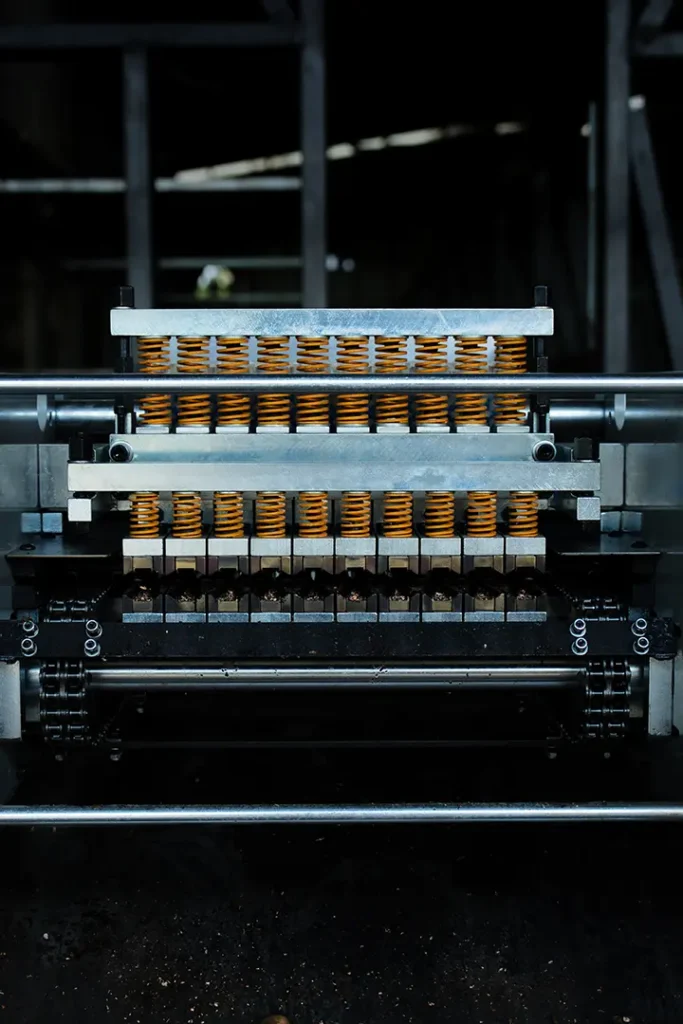
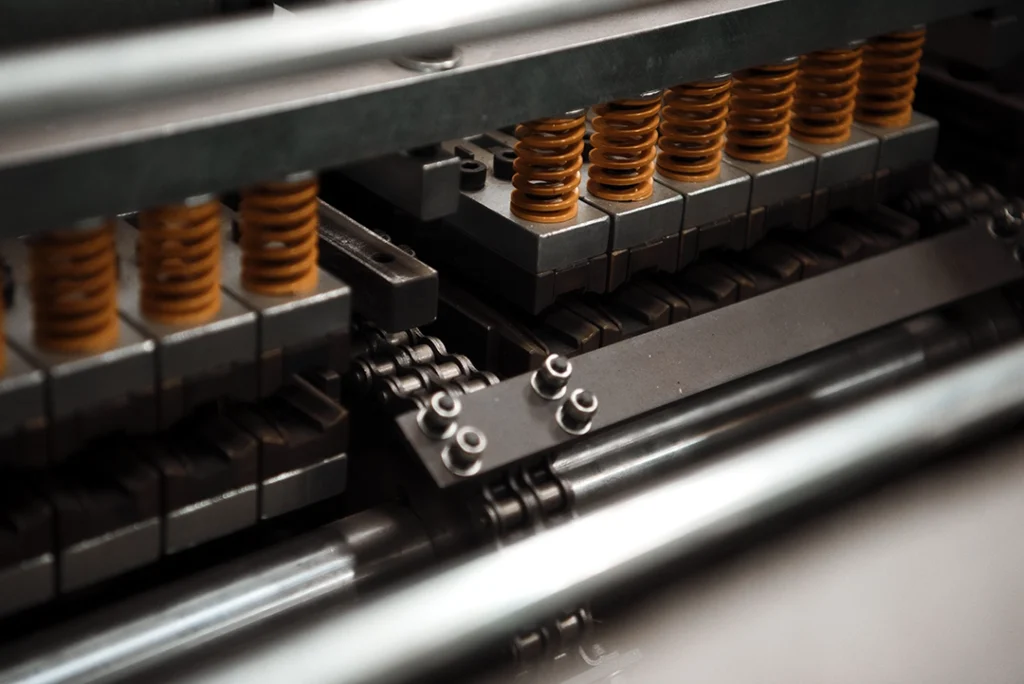
A cashew cutting machine specifically refers to the cutter or cutting head that opens the raw cashew shell.
A cashew shelling machine or shelling line can refer more broadly to the complete system surrounding the cutting operation, including feeding, cutting, separation, conveying, grading and electrical control.
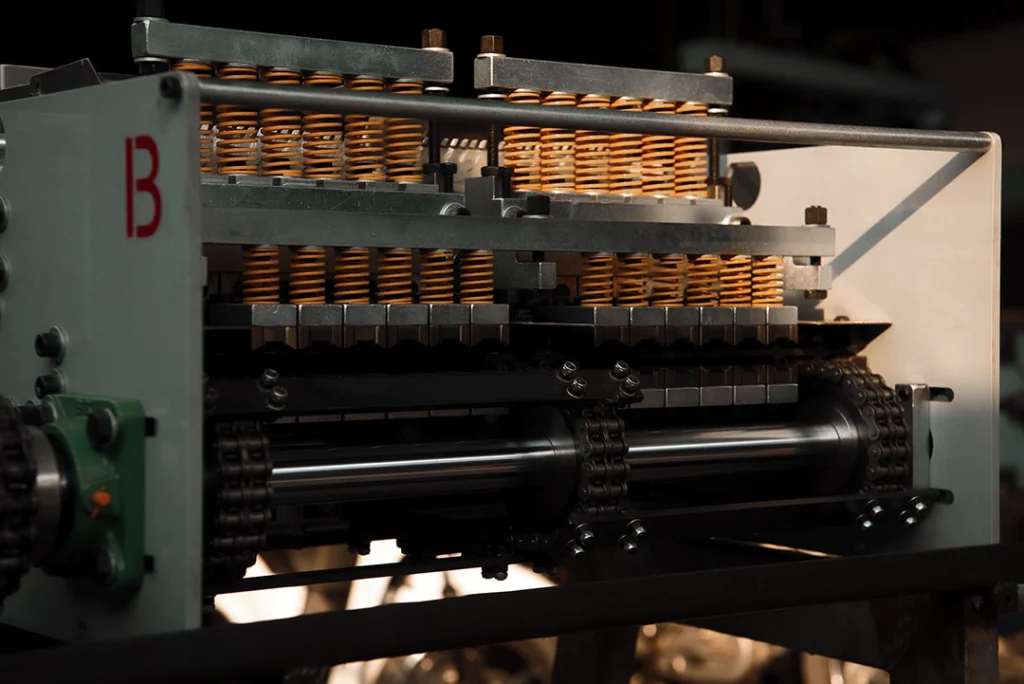
Daniel Machine uses cutter heads as part of integrated shelling configurations according to the required factory capacity.
How Automatic Cashew Shelling Works
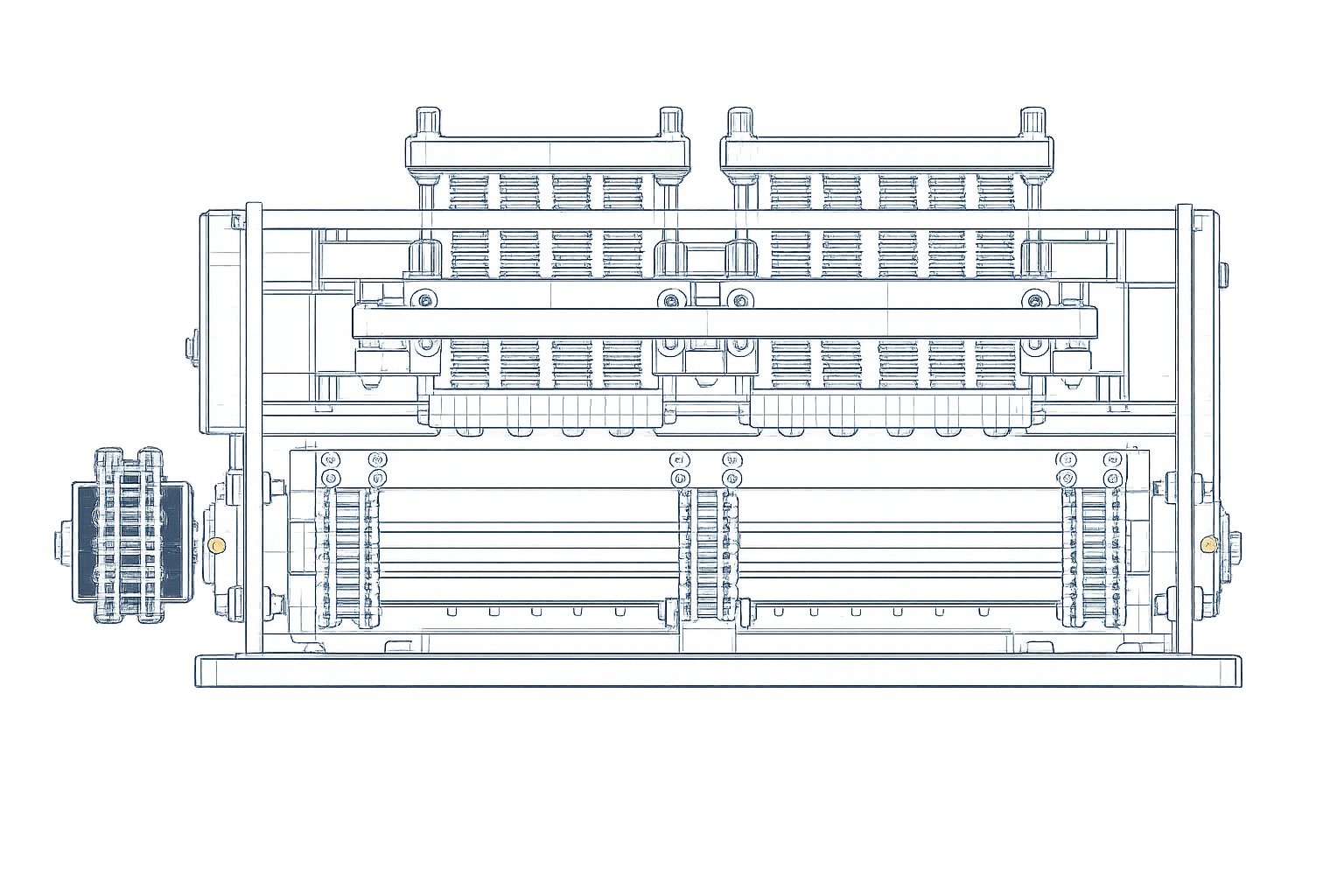
1. Raw Cashew Preparation and Feeding
Raw cashew nuts should be properly prepared and conditioned before entering the shelling line.
The feeding hopper and elevator then transfer material toward the processing equipment while maintaining a controlled flow.
2. Nut Size Separation
Cashew nuts vary significantly in size and shape.
Separating them into appropriate size groups allows the cutter setting to work more consistently. A cutter adjusted for one nut size may produce different results when substantially larger or smaller nuts enter the same process.
Step 3: Nut Positioning
The feeding mechanism guides each nut toward the cutting position.
Correct orientation is important because the irregular shape of a cashew nut affects where the shell should be opened.
4. Precision Shell Cutting
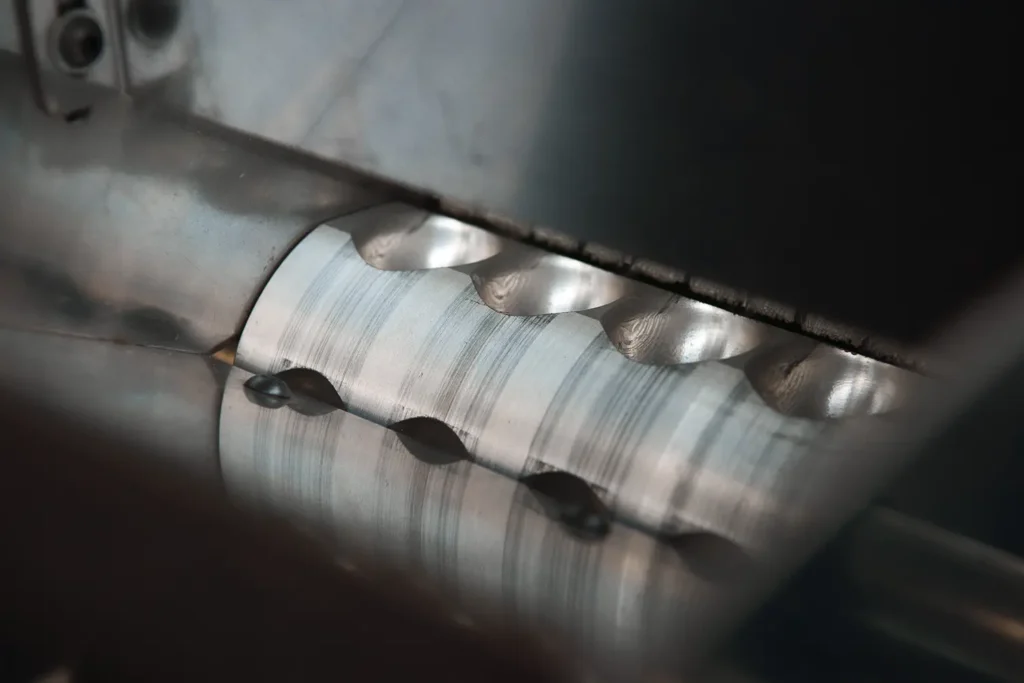
The cutter head opens the shell using the selected blade configuration and machine adjustment.
The objective is to open the shell sufficiently while limiting unnecessary damage to the kernel.
5. Shell and Kernel Separation
After cutting, vibrating sieves, blowers and separators can help remove loose shell material and move the recovered kernels to the next stage.
6. Kernel Collection and Downstream Processing
After shelling, kernels can proceed to subsequent operations such as drying, peeling, grading, inspection and packing depending on the final processing-line configuration.
3-Blade Cashew Shelling Machine – 70–100 kg/h
The 3-blade integrated shelling line has a stated cutting capacity of approximately 70–100 kg/h, corresponding to approximately 560–800 kg of raw-cashew input per eight-hour shift.
Under suitable processing conditions, the stated:
- Uncut nut rate is below 10%;
- Shell-fragment rate is below 5%.
This configuration is intended for small factories, cooperatives and processors requiring a controlled entry point into mechanized shelling.
One complete configuration can include a cutter head, vibrating sieves, feeding equipment, elevators, shell separation, kernel grading, blowers and an electrical control cabinet.
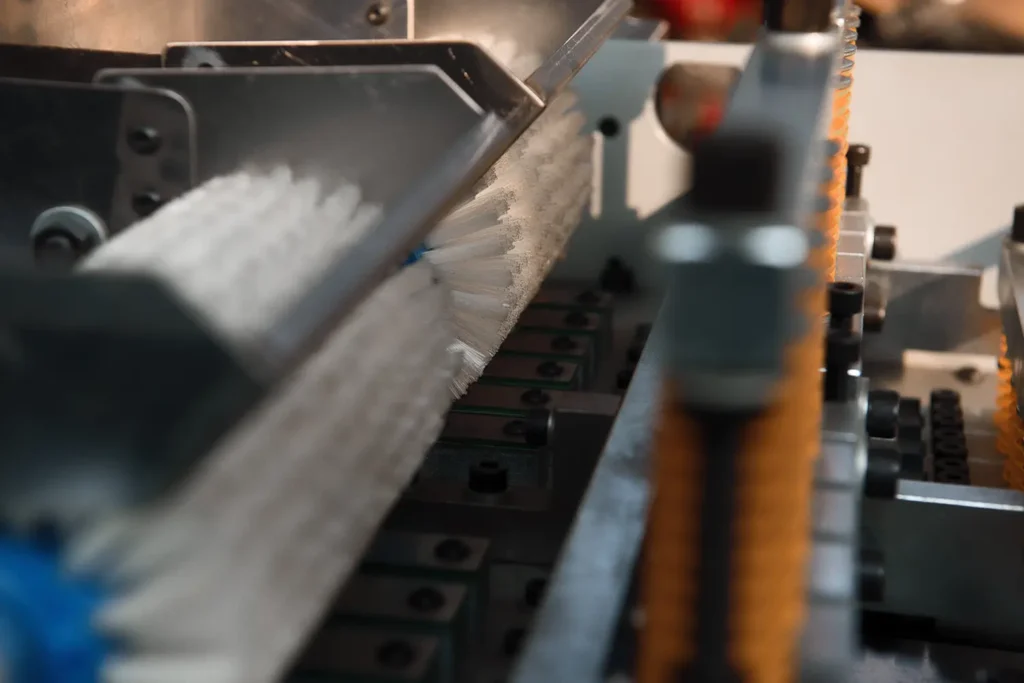
6-Blade Cashew Cutting Machine – 160–200 kg/h
The 6-blade system provides a stated processing capacity of approximately 160–200 kg/h, equivalent to around 1,280–1,600 kg per eight-hour shift.
Its stated uncut-nut rate is below 10% and shell-fragment rate is below 5% under suitable operating conditions.
This configuration is relevant when the required throughput exceeds the 3-blade range but does not require the capacity of the larger systems.
8-Blade Cutting Head – 200–250 kg/h
8-Blade Cutting Head – 200–250 kg/h
The 8-blade cutting head has a stated capacity of approximately 200–250 kg/h.
Controlled specifications currently include:
- Power: 0.75 kW;
- Dimensions: approximately L800 × W600 × H450 mm;
- Kernel breakage rate: below 10%.
Actual kernel results depend on raw nut grade, preparation and cutter adjustment.
10-Blade Cashew Shelling Machine – 270–400 kg/h
The 10-blade configuration has a stated cutting capacity of approximately 270–400 kg/h, corresponding to approximately 2,160–3,200 kg of raw-cashew input during an eight-hour shift.
The stated:
- Uncut nut rate is below 10%;
- Shell-fragment rate is below 5%.
Because its operating range overlaps with the 12-blade configuration, blade count alone should not be used to select between these two machines.
12-Blade Fully Automatic Cutting Head – 300–500 kg/h
The Daniel Machine 12-Blade Fully Automatic Cashew Cutting Head has a stated general processing capacity of approximately 300–500 kg/h.
| Specification | Details |
|---|---|
| Product | 12-Blade Fully Automatic Cashew Cutting Head |
| Brand | Daniel Machine |
| General Capacity | 300–500 kg/h |
| Whole-Kernel Recovery | >90% |
| Approximate Weight | 310 kg |
| Voltage | 220–380 V, three-phase |
| Power | 0.75 kW |
| Dimensions | L750 × W770 × H440 mm |
| Grade A Broken Kernel Rate | 2–4% |
| Grade B Broken Kernel Rate | 3–6% |
| Grade C & D Broken Kernel Rate | 4–7% |
Performance note: Actual processing results can vary according to raw nut size, moisture condition, preparation, machine adjustment and feeding stability.
16-Blade Cashew Shelling Configuration – 350–600 kg/h
The 16-blade configuration has a stated capacity of approximately 350–600 kg/h, equivalent to approximately 2,800–4,800 kg during an eight-hour shift.
Final system performance depends on the configuration of the cutting, feeding, separation and downstream equipment.
For this capacity range, the complete plant requirement should be evaluated rather than selecting a machine according to blade count alone.
10-Blade vs 12-Blade Cashew Shelling Machine
The operating ranges of the 10-Blade and 12-Blade configurations overlap. Compare their stated processing capacity, eight-hour input range and available performance indicators below.
| Specification | 10-Blade | 12-Blade |
|---|---|---|
| Stated Capacity | 270–400 kg/h | 300–500 kg/h |
| 8-Hour Input | 2,160–3,200 kg | 2,400–4,000 kg |
| Uncut Rate | <10% stated | — |
| Shell Fragment Rate | <5% stated | — |
| Whole-Kernel Recovery | — | >90% stated |
| Detailed Grade Breakage Data | — | Available |
Comparison note: The stated capacity ranges overlap between approximately 300 and 400 kg/h. Capacity alone should therefore not be the only factor when selecting between the two configurations. Available performance data, production targets, raw material conditions and final line configuration should also be considered.
A processor targeting approximately 300–400 kg/h should therefore evaluate more than capacity.
Raw nut characteristics, kernel-quality requirements, available downstream capacity and the proposed line configuration should be considered before the final machine is selected.
Which Cashew Shelling Machine Should You Choose?
Start with your actual required hourly throughput.
Up to 100 kg/h
Consider the 3-blade 70–100 kg/h integrated line.
Around 160–200 kg/h
Consider the 6-blade 160–200 kg/h configuration.
Around 200–250 kg/h
The 8-blade cutting head covers this operating range.
Around 270–400 kg/h
The 10-blade configuration provides stated capacity of 270–400 kg/h.
Around 300–500 kg/h
The 12-blade fully automatic cutting head provides stated capacity of 300–500 kg/h and documented whole-kernel recovery and grade-specific breakage figures.
Around 350–600 kg/h
The 16-blade configuration covers the highest stated capacity range currently offered in this machine family.
Capacity alone should not determine the final selection.
Also evaluate:
- Raw cashew size distribution;
- Raw material Preparation;
- Moisture condition;
- Desired kernel quality;
- Operating hours per shift;
- Electrical supply;
- Available factory space;
- Downstream equipment capacity;
- Future production requirements.
Standard Integrated Shelling Line Configuration
Depending on the machine model and project requirements, an integrated shelling line may include:
- Cashew cutter head;
- Vibrating sieves;
- Feeding hopper and elevator;
- Kernel elevator;
- Feeding hopper to cutter;
- Shell size separator;
- Kernel size grader;
- Blowers;
- Electrical control cabinet;
- Additional conveying or material-handling equipment according to the project.
The exact quantities, dimensions and technical specifications should be confirmed in the final technical proposal.
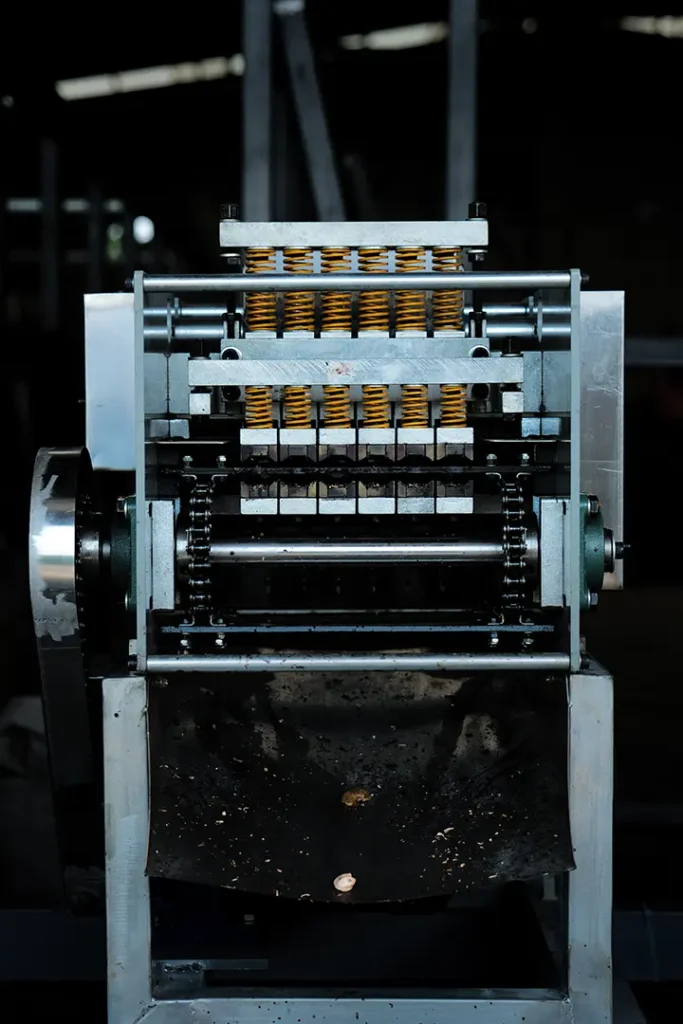
Understanding Shelling Machine Performance
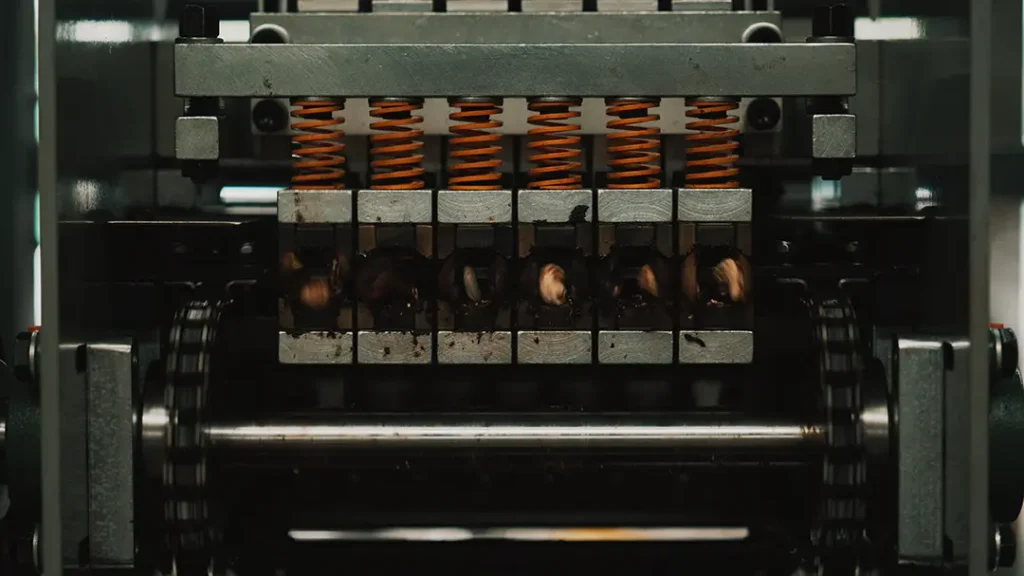
Cutting Capacity
Cutting capacity describes the approximate quantity of prepared raw cashew nuts processed by the machine per hour.
It should not be interpreted as final edible-kernel output.
Uncut Nut Rate
The uncut rate represents nuts that pass through the cutting operation without being opened correctly.
Nut size, preparation, moisture, positioning and blade adjustment can influence the result.
Shell-Fragment Rate
The shell-fragment rate measures shell material remaining with kernels after the cutting and separation process.
Shell fragments create additional downstream separation requirements.
Whole-Kernel Recovery
Whole-kernel recovery indicates how much of the recovered kernel remains whole after processing.
The figure should always be evaluated together with the raw-material condition and operating parameters.
Broken Kernel Rate
Kernel breakage should be evaluated separately from cutting capacity.
Raw nut grade, moisture, conditioning, blade setting and feeding conditions can all affect the final result.
Factors That Affect Cashew Shelling Results
Raw Nut Size
Consistent nut sizing helps maintain appropriate cutter settings.
Moisture and Conditioning
Steaming, drying and conditioning affect both shell behavior and kernel condition during cutting.
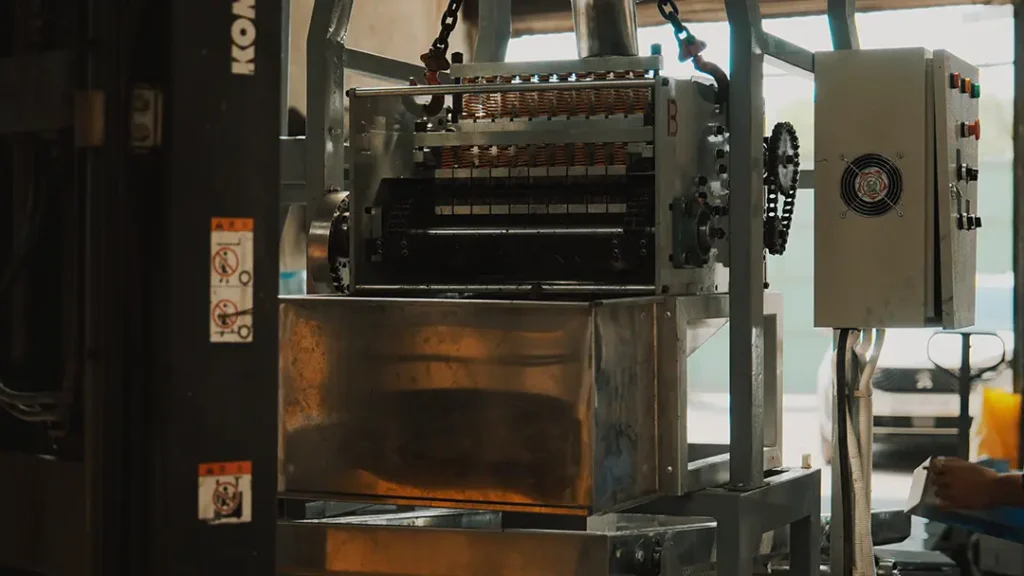
Blade Adjustment
Blade depth, alignment, spacing and condition should be checked when raw-material characteristics change.
Feeding Stability
Irregular or excessive feeding can affect nut positioning and processing consistency.
Preventive Maintenance
Cutters, blades, chains, gears, sieves, blowers, conveyors and other moving components should be inspected and maintained according to the machine requirements.
Cashew Shelling Machine Price
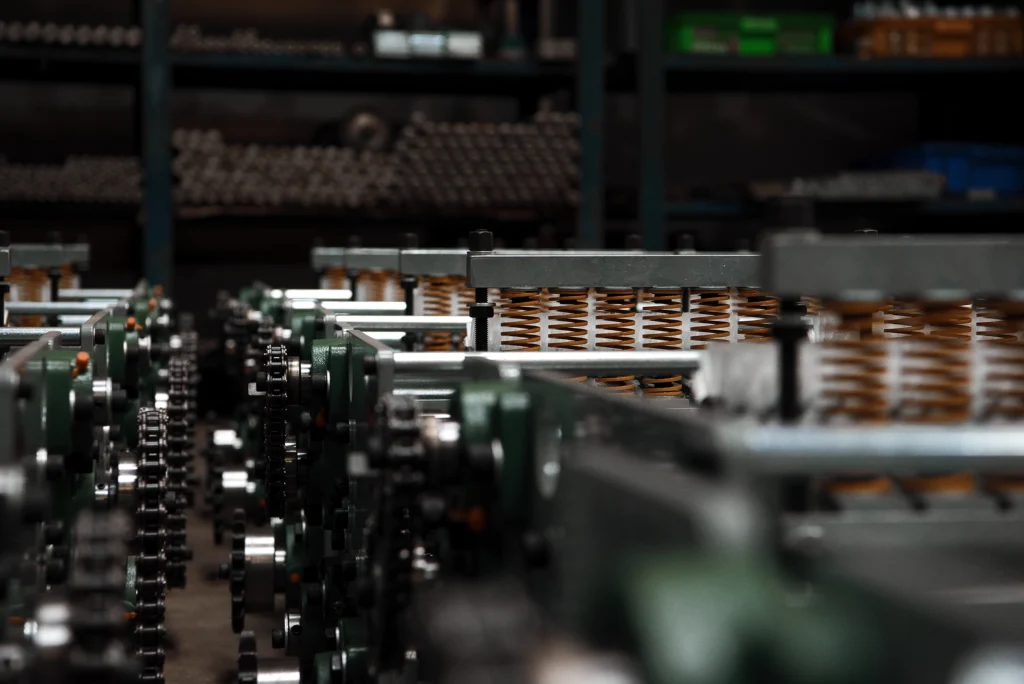
Daniel Machine does not use one universal price for every cashew shelling machine configuration.
Quotation requirements can vary according to:
- Required hourly capacity;
- Cutter-head configuration;
- Standalone machine or integrated line;
- Feeding and separation equipment;
- Electrical requirements;
- Plant automation scope;
- Installation and training requirements;
- Spare-parts requirements;
- Delivery destination;
- Agreed shipping terms.
For an accurate quotation, the first step is to define the required processing configuration.
Information to Send for a Cashew Shelling Machine Quotation
Information to Send for a Cashew Shelling Machine Quotation
To help Daniel Machine evaluate the appropriate configuration, provide as much of the following information as possible:
- Required capacity in kg/h;
- Expected operating hours per shift;
- Typical raw cashew size or grade;
- Raw material condition and preparation method;
- Required processing stages;
- Available power supply;
- Existing or new processing facility;
- Destination country;
- Available production space where relevant;
- Specific kernel-quality requirements.
Raw material testing can also be discussed when required before the final cutter configuration is confirmed.
Frequently Asked Questions
Key questions about Daniel Machine automatic cashew shelling and cutting machines, processing capacity, raw-material preparation and machine selection.
What capacity does an automatic cashew shelling machine have?
Daniel Machine currently offers shelling and cutting configurations with stated capacities from approximately 70 to 600 kg/h, depending on the selected model.
What is the difference between a cashew shelling machine and a cashew cutting machine?
A cutting machine refers specifically to the equipment that opens the shell. A shelling machine or shelling line can refer more broadly to the complete cutting, separation, conveying and control system.
Which machine is suitable for 160–200 kg/h?
The Daniel Machine 6-blade cashew cutting machine has a stated processing capacity of approximately 160–200 kg/h.
Which machine is suitable for 300–500 kg/h?
The 12-blade fully automatic cutting head has a stated general capacity of approximately 300–500 kg/h.
What is the difference between the 10-blade and 12-blade machines?
The 10-blade system is rated at approximately 270–400 kg/h, while the 12-blade configuration is rated at approximately 300–500 kg/h. Because the ranges overlap, machine selection should also consider raw material, kernel-quality requirements and complete line configuration.
Does kg/h refer to final cashew kernels?
No. The stated cutting capacity refers to the approximate weight of prepared raw cashew material processed per hour. It should not be interpreted as final edible-kernel output.
What affects kernel breakage?
Raw nut size, moisture condition, pre-treatment, cutter adjustment, feeding stability and machine maintenance can all influence kernel breakage.
How should raw cashew nuts be prepared before shelling?
Raw cashew nuts should be properly prepared and conditioned and separated into appropriate size grades before cutting. The exact preparation process should match the raw material and shelling system.
How much does a cashew shelling machine cost?
Price depends on capacity, cutter configuration, supporting equipment, electrical requirements, automation scope, project support and shipping requirements. Daniel Machine provides quotations according to the actual machine or processing-line configuration.
Can Daniel Machine evaluate raw cashew material before selecting a machine?
Raw-material testing can be discussed when required to help evaluate cutter configuration and operating parameters.
Request a Cashew Shelling Machine Quotation
To discuss the appropriate shelling configuration for your factory, send Daniel Machine your:
required kg/h capacity + raw cashew characteristics + operating schedule + destination country + required processing stages.
Daniel Machine can use this information to evaluate the suitable machine and processing-line configuration before preparing a quotation.