
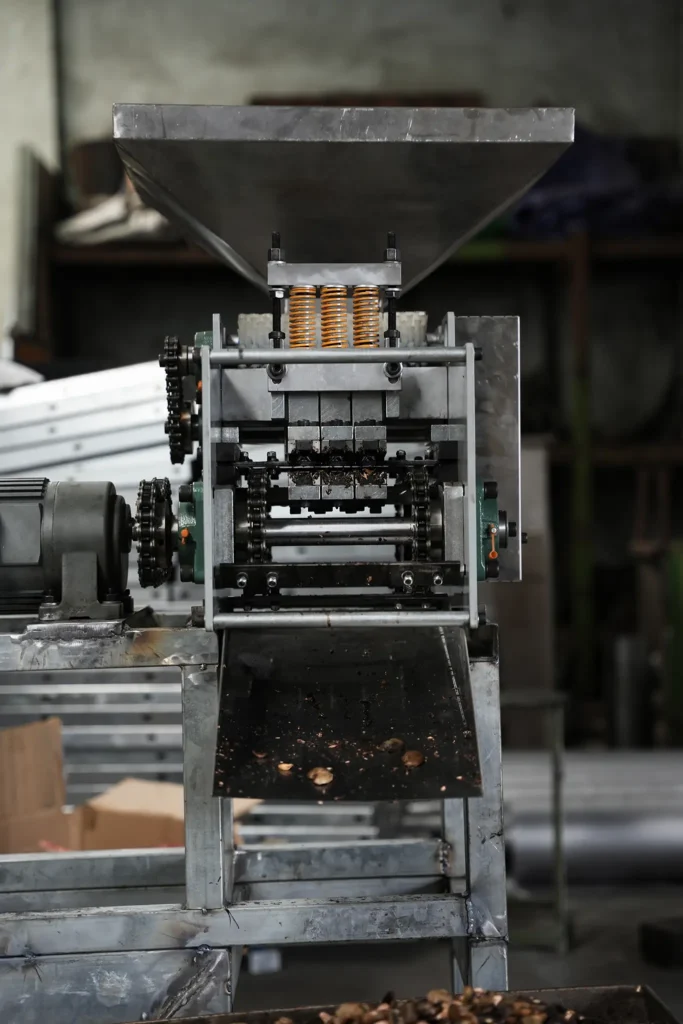
What Is the Daniel Machine Small Cashew Shelling Machine?
The Daniel Machine solution is a complete processing line built around a three-blade cutter head. It receives prepared raw cashew nuts, feeds them to the cutter, separates shells from kernels, and grades the recovered kernels. Under an eight-hour operating schedule, the line delivers a stated daily output of 560–800 kg per 8-hour shift.
In direct terms, this machine is intended for small and medium factories seeking 70–100 kg/hour capacity, an uncut nut rate below 10%, and a monkey head—or shell fragment—rate below 5%. These indicators allow the line to be evaluated against production targets.
Technical specifications of the Daniel Machine 3-Blade Integrated Shelling Line for small-scale cashew processing operations.
| Specification | Value |
|---|---|
| Model | 3-Blade Integrated Shelling Line |
| Cutting Capacity | 70–100 kg/h |
| Output per 8-Hour Shift | 560–800 kg |
| Uncut Nut Rate | Below 10% |
| Shell Fragment Rate | Below 5% |
| Recommended Scale | Small factories and cooperatives |
Performance note: Actual capacity and processing performance may vary depending on raw cashew size, moisture condition, pre-treatment, blade adjustment, feeding stability, and operating conditions.
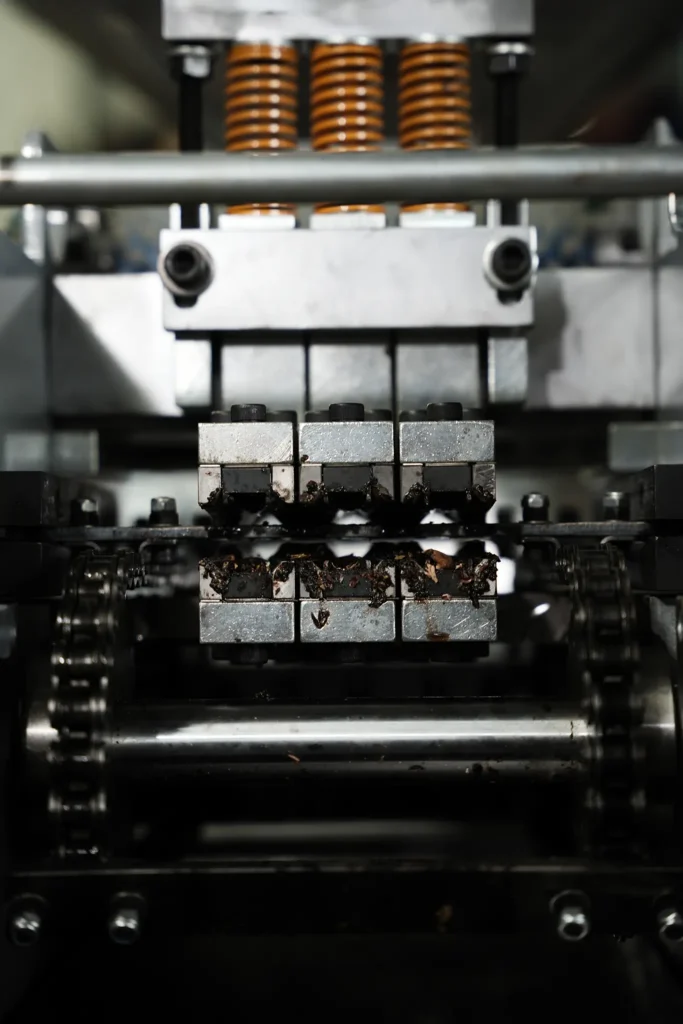
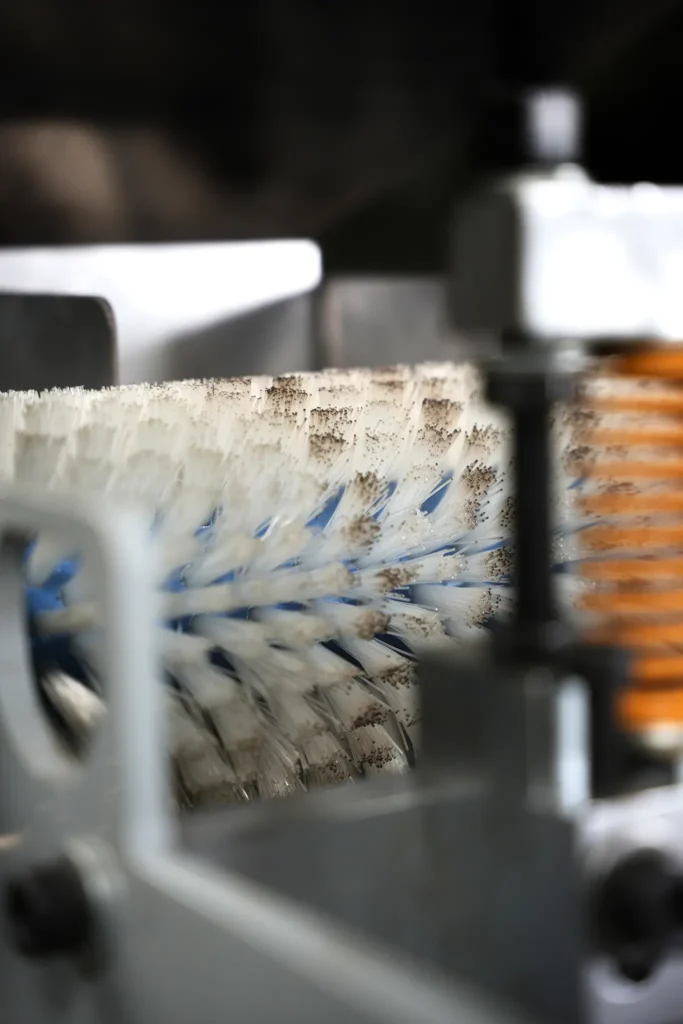
Small Cashew Shelling Machine Specifications
Cutting Capacity: 70–100 kg/hour
The cutting capacity indicates how much prepared raw cashew material can be processed in one hour. A range of 70–100 kg/hour helps a business match output with its material supply and downstream operations. Results may vary with nut size, preparation, adjustment, and operator practices.
Daily Output: 560–800 kg per 8-Hour Shift
At the stated hourly capacity, the line produces 560–800 kg per 8-hour shift. This helps managers estimate daily raw-material requirements, coordinate workers, and schedule orders against a defined shift length.
Planned cleaning, inspection, blade adjustment, and material changes should still be included in the production schedule.
Uncut Nut Rate: Below 10%
The specified uncut nut rate is < 10%. An uncut nut must normally be recovered and returned for additional processing, so controlling this rate helps limit recirculation and unnecessary handling. Correct size separation and stable feeding are important because raw cashew nuts vary in dimensions and shape.
Regular cutter inspection, calibration, and consistent raw-nut grading support reliable performance. Tracking the uncut rate by batch also provides useful maintenance data.
Monkey Head (Shell Fragment) Rate: Below 5%
The monkey head (shell fragment) rate is < 5%. In cashew processing, shell fragments remaining with kernels create additional sorting work and may reduce the efficiency of downstream handling. Keeping this indicator below the specified level supports cleaner material flow after cutting.
Vibrating sieves, shell separation, and blowers separate materials by size and aerodynamic behavior through multiple stages.
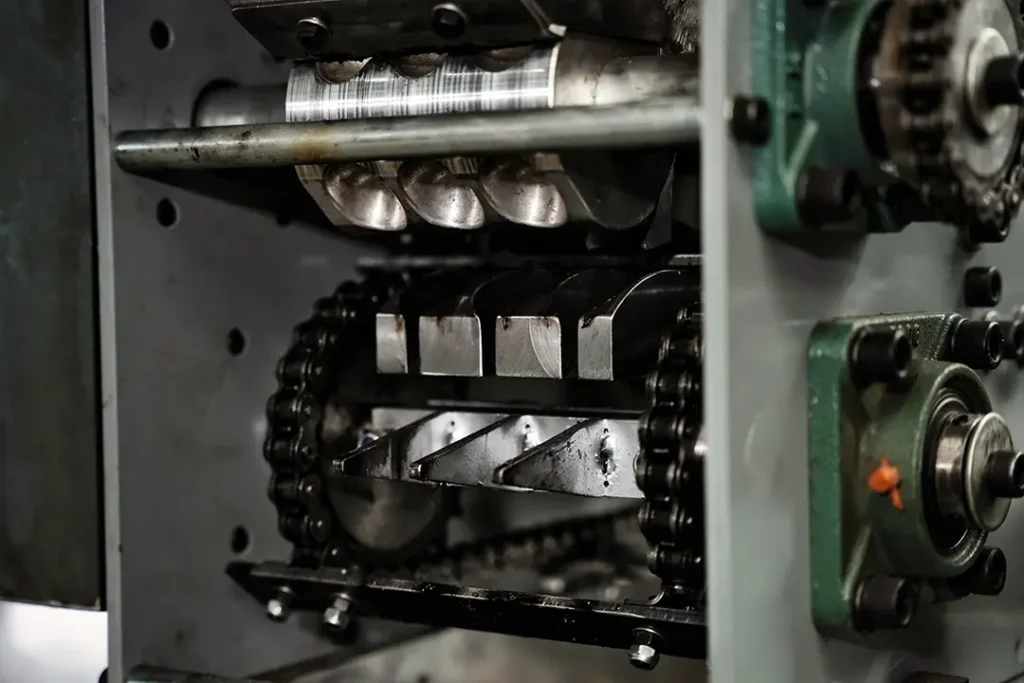
Complete 3-Blade Cashew Shelling Line Configuration
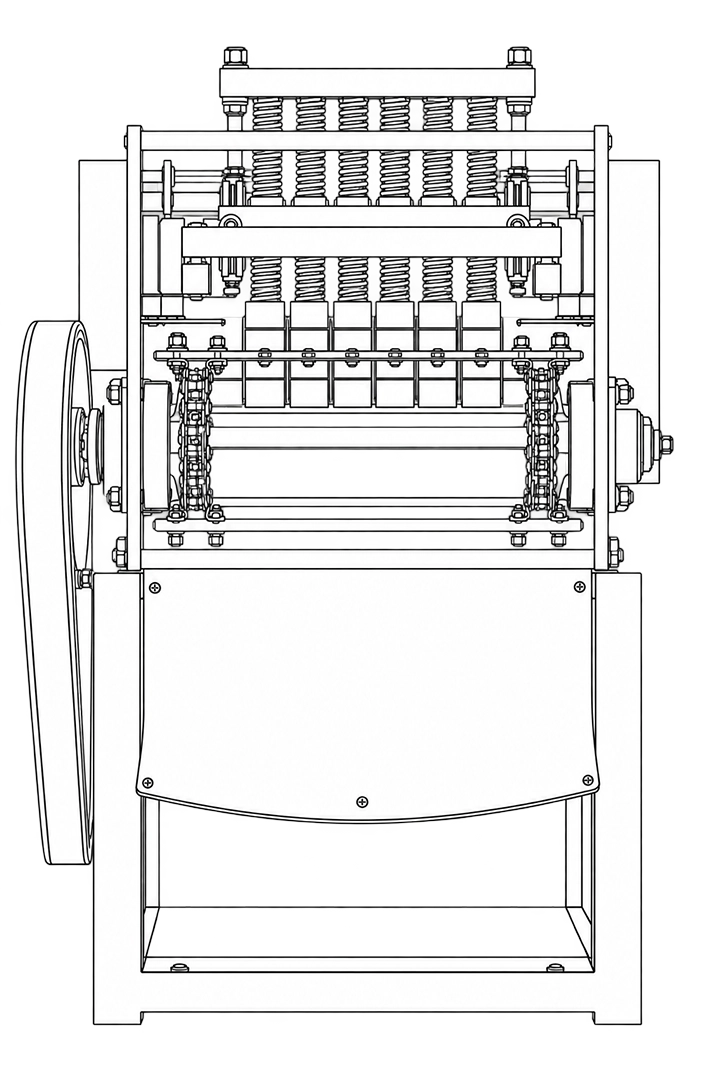
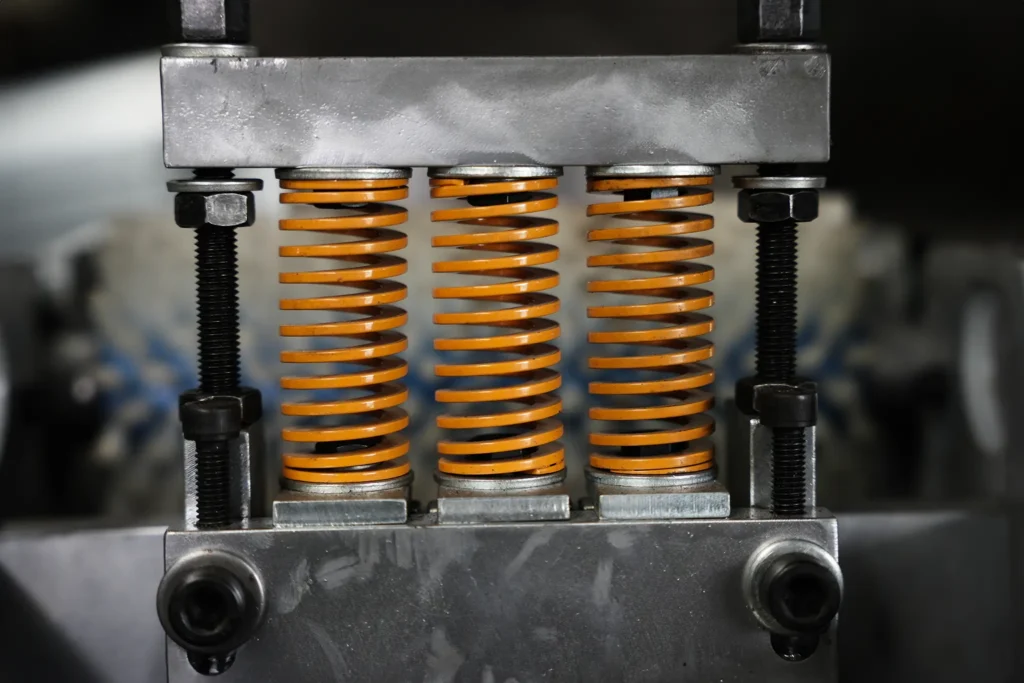
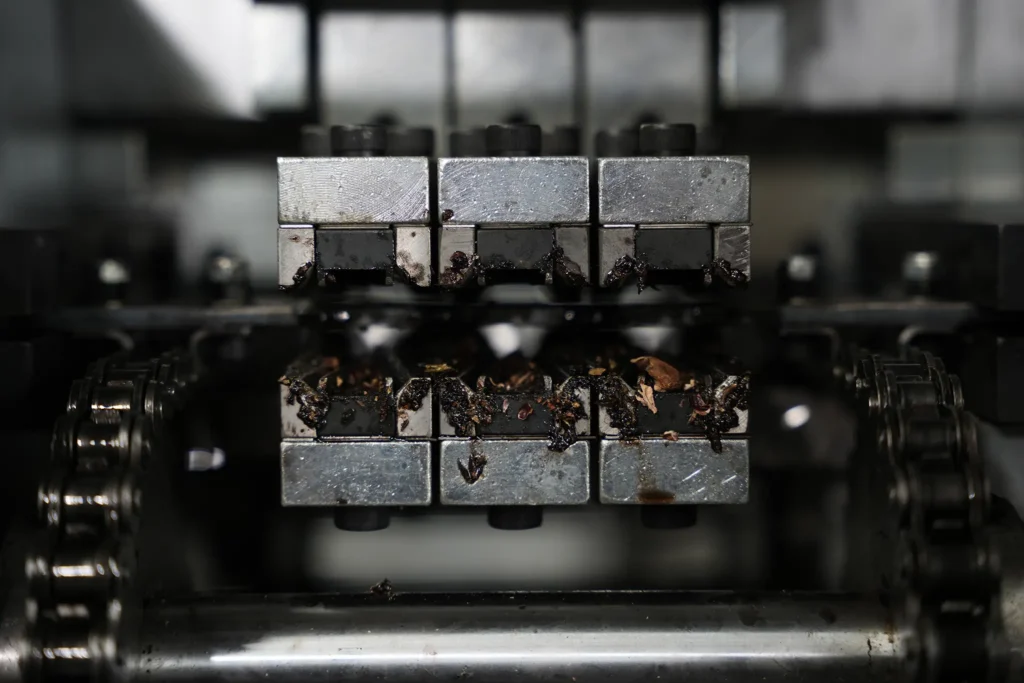
1. 3-blade cutter head – 1 unit:
Performs the primary cashew shell-cutting operation.
2. Vibrating sieve – 2 units:
Screens and separates material during processing.
3. Feeding hopper and elevator – 1 set:
Receives raw material and transfers it into the line.
4. Kernel elevator – 1 unit:
Moves recovered kernels to the next processing stage.
5. Feeding hopper to cutter – 1 unit:
Maintains controlled delivery of nuts to the cutter head.
6. Shell size separator – 1 unit:
Separates shell material according to size.
7. Kernel size grader – 1 unit:
Classifies kernels into size groups for further handling.
8. 2HP single blower – 2 units:
Uses airflow to assist with shell and lightweight-material separation.
9. 2HP dual blower – 2 units:
Provides additional two-channel air separation within the line.
10. Electrical control cabinet – 1 unit:
Centralizes electrical control for coordinated operation.
Together, these components create a continuous workflow. Elevators reduce repeated manual transfer, while sieves, separators, graders, and blowers organize material after cutting.
Economic and Operational Benefits
More Predictable Labor Use
Mechanized feeding, cutting, conveying, and separation let employees focus on monitoring, inspection, and material management. This reduces repetitive handling and supports consistent labor allocation.
Controlled Output for Growing Factories
The 70–100 kg/hour capacity suits businesses expanding beyond manual production without requiring a large industrial line. The modular configuration also helps maintenance teams isolate operational issues.
Better Production Data
Hourly capacity, shift output, uncut rate, and shell fragment rate provide practical benchmarks. Managers can compare batch results, identify trends, and adjust preparation or settings.
Improved Downstream Flow
Shell separation and kernel grading organize the output before later processing. Cleaner, more consistently classified material can reduce avoidable handling during drying, peeling, final grading, and quality inspection. The resulting economic value depends on raw-nut quality, product grade, labor cost, utilization rate, and local processing conditions, so buyers should calculate returns using their own factory data.
Is This Machine Suitable for Your Cashew Business?
This line is relevant for small factories, cooperatives, regional processors, and growing cashew businesses targeting several hundred kilograms per shift. Before selecting the equipment, confirm your raw-nut size distribution, preparation method, available electrical supply, workspace, downstream capacity, and expected operating hours. Matching each processing stage prevents bottlenecks and supports stable line performance.
Request a Small Cashew Shelling Machine Consultation
Daniel Machine can help you review the required capacity, proposed factory workflow, and equipment configuration for your raw material. To evaluate whether this small cashew shelling machine fits your operation, contact Daniel Machine with your target output, typical cashew nut sizes, working hours per shift, destination country, and available production area. This information will support a more accurate equipment recommendation and project discussion.
Frequently Asked Questions About the Small Cashew Shelling Machine
Find answers about processing capacity, production output, shelling performance, machine configuration, operating conditions, and choosing the right cashew shelling machine for your production requirements.
What is the processing capacity of the Daniel Machine small cashew shelling machine?
The Daniel Machine small cashew shelling machine has a rated cutting capacity of 70–100 kg of raw cashew nuts per hour. Actual throughput may vary depending on nut size, moisture content, raw material preparation, machine adjustment, feeding consistency, and operating conditions.
How much cashew can the machine process in an 8-hour shift?
At its rated operating capacity, the machine can process approximately 560–800 kg of raw cashew nuts per 8-hour shift. This production range is suitable for small and growing cashew processors upgrading from manual or semi-manual shelling operations.
What is the uncut nut rate of the small cashew shelling machine?
The specified uncut nut rate is below 10% under suitable processing conditions. Proper raw nut grading, preparation, consistent feeding, and correct machine adjustment can help maintain stable cutting performance.
What is the shell fragment or monkey head rate?
The specified shell fragment, also known as the monkey head rate, is below 5%. Actual performance can vary according to raw cashew characteristics, nut size distribution, preparation quality, moisture level, and machine settings.
What equipment is included in one complete small cashew shelling line?
One complete Daniel Machine small cashew shelling line includes a 3-blade cutter head, two vibrating sieves, feeding hopper and elevator, kernel elevator, feeding hopper to cutter, shell size separator, kernel size grader, two 2HP single blowers, two 2HP dual blowers, and one electrical control cabinet.
Who is the 70–100 kg/h cashew shelling machine suitable for?
The 70–100 kg/h model is suitable for small cashew factories, growing processors, cooperatives, and businesses upgrading from manual or semi-manual shelling. It provides an integrated processing solution while maintaining a practical production capacity for smaller-scale operations.
Is a cashew shelling machine the same as a cashew cutting machine?
The terms are closely related but describe different scopes. A cashew cutting machine specifically performs the shell-cutting operation, while a cashew shelling machine may refer more broadly to equipment used for shell opening, separation, and kernel recovery. The Daniel Machine 3-blade line uses a mechanical cutter head within an integrated shelling system.
Should I choose the 3-blade or 6-blade cashew shelling machine?
The 3-blade small cashew shelling machine has a rated capacity of 70–100 kg/h and is suitable for smaller production requirements and businesses entering mechanized cashew processing. For higher production demand, Daniel Machine also offers the 6-blade cashew cutting machine with a rated capacity of 160–200 kg/h. The most suitable model depends on daily raw cashew volume, production targets, factory layout, labor availability, and future expansion plans.