
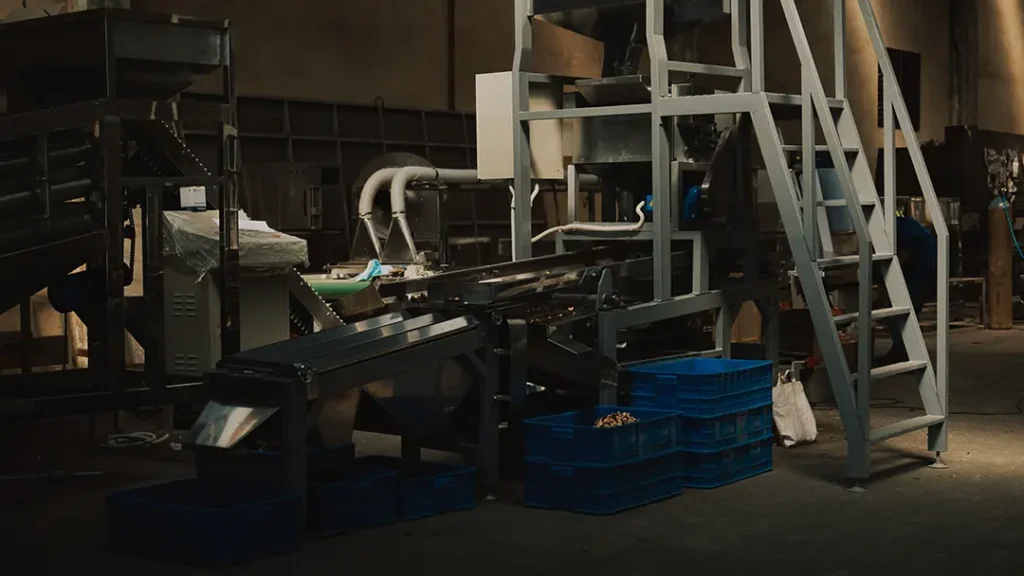
Cashew Scooping Machine Line For Family
A cashew scooping machine is designed to automatically collect, lift, and transfer cashew kernels or processed cashew products between different stages of production. The equipment is commonly integrated into processing lines where efficient material movement is essential for maintaining production flow.
By replacing repetitive manual scooping tasks, the machine helps manufacturers improve process continuity and reduce physical strain on workers. Depending on production requirements, the machine can be customized to handle different capacities and plant layouts.
Automated Material Handling System
The primary function of the machine is to automate the transfer of cashew products from one processing stage to another. This reduces interruptions caused by manual handling and helps maintain a steady production pace.
Food-Grade Construction
Most industrial cashew processing equipment is manufactured using food-grade stainless steel components. This construction supports hygiene requirements and simplifies cleaning and maintenance procedures.
Adjustable Capacity Options
Production facilities vary significantly in output volume. Therefore, a cashew scooping machine is typically available in multiple capacity configurations, allowing businesses to select a model that matches their operational requirements.
Energy-Efficient Operation
Modern systems are designed to optimize power consumption while maintaining reliable performance. Energy-efficient motors and control systems can help reduce operational costs over time.
Easy Integration with Existing Production Lines
Many processing plants prefer solutions that minimize disruption during installation. A well-designed scooping machine can often be integrated into existing production workflows without major infrastructure modifications.
Reduced Labor Dependency
Labor shortages and rising labor costs continue to affect food processing industries worldwide. By automating repetitive material handling tasks, manufacturers can allocate workers to higher-value activities that require human judgment and quality control.
Improved Production Consistency
Manual scooping can result in variations in handling speed and material flow. Automation helps standardise these processes, creating a more predictable and stable production environment.
Lower Product Loss
During manual transfer, kernels may be dropped, damaged, or contaminated. A properly configured cashew scooping machine helps reduce unnecessary product loss and contributes to improved yield management.
Enhanced Workplace Safety
Repeated lifting and carrying activities can increase the risk of worker fatigue and musculoskeletal injuries. Automation reduces the need for physically demanding tasks, helping create a safer working environment.
Better Production Planning
Consistent machine performance allows managers to forecast production output more accurately. This can support scheduling, inventory planning, and overall operational efficiency.
Labor Requirements
Manual scooping typically requires multiple workers to maintain production flow, especially in medium- and large-scale facilities. In contrast, a cashew scooping machine can perform continuous material transfer with minimal operator involvement.
Productivity Levels
Human performance naturally varies throughout a work shift due to fatigue and workload fluctuations. Automated systems maintain a more stable operating speed, contributing to consistent throughput.
Product Handling Quality
Manual handling increases the likelihood of accidental spills and inconsistent transfer practices. Automated equipment provides greater process control and repeatability.
Long-Term Cost Considerations
Although automation requires an initial investment, many processing facilities evaluate equipment based on total operating costs over time. Reduced labor requirements, lower product loss, and improved productivity can contribute to a favorable return on investment depending on production volume and operating conditions.
Production Capacity
The selected machine should align with current output requirements while allowing room for future growth. Oversized or undersized equipment can affect overall efficiency.
Material Characteristics
Different cashew products may vary in size, moisture content, and handling requirements. Understanding product specifications is important when selecting the appropriate machine configuration.
Plant Layout
Available floor space and production line design should be considered before installation. Equipment dimensions and transfer heights must fit existing operational workflows.
Maintenance Requirements
Routine maintenance is essential for long-term performance. Buyers should evaluate accessibility of components, cleaning procedures, and availability of spare parts.
Automation Compatibility
For facilities pursuing broader digital transformation initiatives, compatibility with automated control systems and production monitoring platforms may provide additional operational advantages.
Why Automation Is Becoming More Important in Cashew Processing
Global demand for processed cashew products continues to encourage manufacturers to improve productivity and operational efficiency. As production volumes increase, manual handling processes can become bottlenecks that limit throughput and increase costs.
A cashew scooping machine supports modernization efforts by automating a critical stage of material movement. When integrated into a comprehensive processing line, the equipment can help facilities achieve more predictable production performance, improved resource utilization, and greater operational control.
Product Brochure and Service Centres
For cashew processing businesses seeking to improve efficiency and reduce reliance on manual handling, a cashew scooping machine represents a practical automation investment. By supporting consistent material transfer, reducing labor demands, and minimizing product loss, the machine can contribute to smoother plant operations and long-term productivity improvements.